

Micro-budget Case Study #50
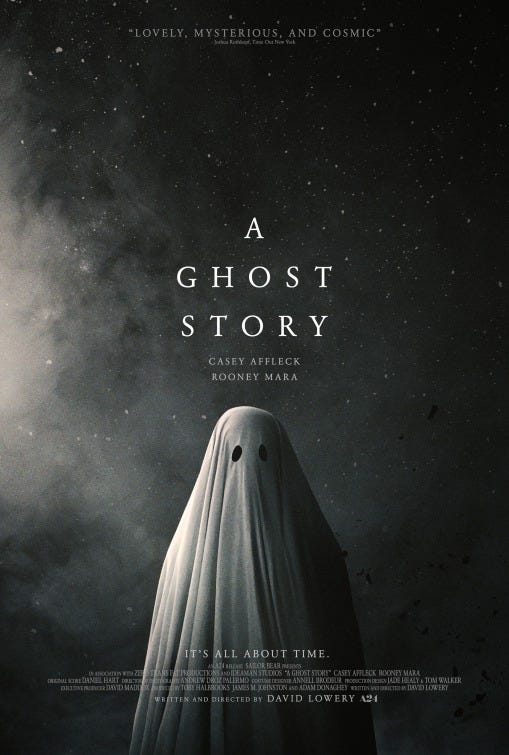
A Ghost Story

I’m late to the party for David Lowery’s A Ghost Story. I didn’t see it when it came out, and I wasn’t aware that it was a micro-budget movie. With a cast led by Casey Affleck and Rooney Mara it didn’t scream micro-budget. Ted Hope put it on his list of micro-budget films, so I finally sat down to check it out, and I enjoyed the film’s intimate portrait of grief and love. It’s a fantastic example of how a filmmaker can use limitations as creative advantages and build a powerful film without all the bells and whistles of a large studio production.
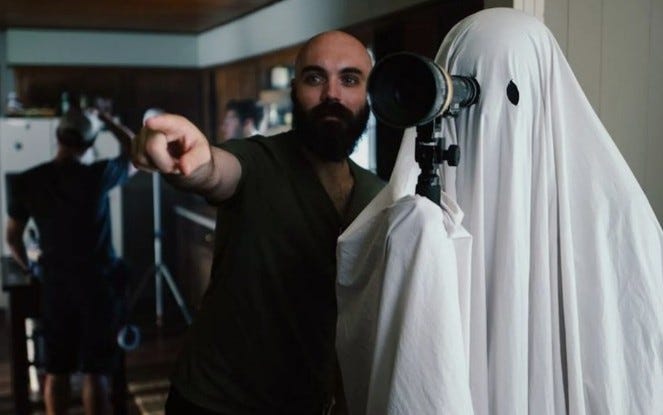
Before I discuss the micro-budget cost-saving techniques Lowery used on A Ghost Story, I have to address the elephant in the room. At the time he made A Ghost Story, Lowery was in a unique position. He had already directed the Sundance award-winning and critically acclaimed film, Ain’t Them Bodies Saints, and the live-action remake of Pete’s Dragon. So, he was able to tap into a network of fantastic actors willing to work with him, as well as an easier path to distribution and marketing. However, rather than making a new giant studio movie, he used his industry success to make a more personal tiny $100,000 movie instead. I’ve got nothing but respect for this move. Also, instead of using fancy visual effects for the ghost, he used a man wearing a bedsheet; mad respect.
Lowery developed the project fast and produced it almost in secret. He wrote the script and assembled a small team of collaborators, including cinematographer Andrew Droz Palermo. Somehow, he managed to make the film without the publicity normally associated with movies featuring actors as recognizable as Affleck and Mara.
One of the most budget-friendly decisions the production made involved the location. Most of the film takes place in a single house. Lowery found a home that resembled the first house he and his wife shared. The house was scheduled for demolition, so the filmmakers were allowed to use it free of charge. This was a huge cost-saving measure because the filmmakers had complete control over the environment and could modify the space as needed without worrying about restoration costs.
The production and wardrobe design embraced simplicity. As I mentioned above, the ghost costume was literally a white sheet with black eye holes. In any other film, this could have felt silly, but Lowery treats it with complete sincerity, and it works. Actually, it more than works; it’s iconic. The filmmakers embraced their limitations and added them to the film’s visual style. Palermo shot the film in a 1.33:1 aspect ratio that resembled old photographs. This choice reinforced the film’s themes of memory and nostalgia.
One of the most powerful scenes in the film is the pie-eating scene featuring Rooney Mara as she spends several minutes eating a pie, while processing her grief. It allows the audience to sit with Mara in a personal and uncomfortable moment. It’s also a great example of why micro-budget filmmaking supports creativity. Without studio executives breathing down your neck, you can experiment and try new and sometimes uncomfortable things without too much financial risk.
Lowery edited the film himself, a practice common throughout his career, which helped cut costs. Rather than spending money on elaborate visual effects, Lowery focused on atmosphere, composition, and sound design. Daniel Hart’s score helped to create a lot of emotional weight, while supporting the film’s sparse aesthetic.
A Ghost Story premiered in the NEXT section of the Sundance Film Festival and generated significant buzz. Critics responded well to the film’s ambition, emotional depth, and originality. It was unlike anything else at the festival in 2017. Even before the Sundance premiere, distributor A24 acquired distribution rights to the film. This was a big win for Lowery because A24 had a reputation for successfully marketing unconventional independent films, and they understood how to position A Ghost Story for audiences. A24’s involvement only added more credibility to an already impressive film.
From a punk rock producing standpoint, there are several important lessons to be learned from A Ghost Story. First, originality is often more valuable than production value. The film’s central image cost almost nothing, but is instantly iconic. Second, a strong emotional core can make limited resources work in your favor. However, for me, the most inspiring thing about A Ghost Story is that it exists because Lowery chose to make something personal rather than market-tested. He could have made anything he wanted at that point in his career, but he chose to make a micro-budget film that he could control. If the goal is to create something that only you could make, then Lowery absolutely succeeded.
I really enjoyed this film, and I’m a little disappointed in myself for not seeing it sooner.
Will Oldham's "Beethoven's 5th" monologue is a golden moment in cinema.
Just FYI, the budget started at 200K and ended up being closer to 300K I think in the end. Still definitely micro budget. They produced it out of the studio I used to work out of in Dallas. And he got WETA to do the VFX because of his connection to them through Pete’s Dragon. I’m friends with David and his producer Toby Halbrooks, and I helped some on the film. Did a bit second unit shooting and was on location when they demolished the house.